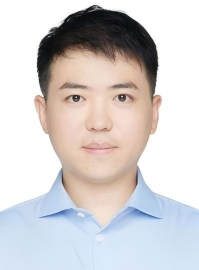
| Prof. Fengming DuDalian Maritime University, China Fengming Du is currently a professor and doctoral supervisor at Dalian Maritime University, having received his Ph.D. from Dalian University of Technology. His primary research interests include engine material design, mechanical analysis, artificial intelligence, and machine vision. He has received numerous honors, such as the Liaoning Province "Hundred, Thousand, and Ten Thousand Talents" award and the Dalian Youth Science and Technology Star, and serves as an editor for journals including Lubricants and Coatings. Dr. Du has presided over multiple scientific research projects, including those funded by the State Administration of Science, Technology and Industry for National Defence, the China Postdoctoral Science Foundation, and key projects of the Liaoning Provincial Natural Science Foundation. He has published over 70 academic papers, with his research covering areas such as the dynamics of floating production storage and offloading (FPSO) units, laser cladding coatings, and the mechanical behavior of continuous casting. Additionally, he holds several patents, including technologies for RGBD underwater salient object detection and lubrication testing machines. As a recipient of the Liaoning Provincial Natural Science Academic Achievement Award and a technical review expert for multiple panels, Dr. Du possesses extensive experience and has made outstanding contributions to the fields of material design and intelligent detection. Title: Research on Non-uniform Illumination Underwater Image Enhancement Method Abstract: To improve the quality of image acquisition, underwater robots are often equipped with artificial light sources for underwater operations. However, the introduction of artificial light sources alters the normal underwater imaging process: it exacerbates the uneven brightness of images, results in distinct distribution characteristics of light intensity, and leads to varying degrees of image distortion across regions with different brightness. In this study, we first classify underwater images with non-uniform illumination, then construct a light-guided enhancement network tailored for such images to enhance different categories of samples. Subsequently, we conduct extensive experimental comparisons between the proposed method and mainstream underwater image enhancement approaches on multiple public underwater image datasets as well as real-world underwater image datasets with non-uniform illumination. The experimental results are analyzed from both visual effects and evaluation metrics, demonstrating that the proposed method can effectively restore image details and recover original colors. Meanwhile, it avoids issues of overexposure or underexposure in images, ensuring an overall improvement in image quality. |

| Assoc. Prof. Lei ChenShandong University, China Lei Chen received the B.Sc. and M.Sc. degrees in electrical engineering from Shandong University, Jinan, China, and the Ph.D. degree in electrical and computer engineering from University of Ottawa, Ontario, Canada. He is currently an Associate Professor with the School of Information Science and Engineering, Shandong University, China. His research interests include image processing and computer vision, visual quality assessment and pattern recognition, machine learning and artificial intelligence. He was the principal investigator of projects granted from the National Natural Science Foundation of China, National Natural Science Foundation of Shandong Province, China Postdoctoral Science Foundation, etc. He has published more than60 papers on top international journals and conferences in recent years including IEEE TIP, Signal Process., ICME, etc. He was awarded the Future Plan for Young Scholars of Shandong University. He served for many international conferencesasProgram Chair,Technical Chair or Publicity Chair. Title: Multi-Modal Spatio-Temporal Modeling Methods for Video Anomaly Detection Abstract:In recent years, the video surveillance systems are widely used in the fields of urban safety, security management, crime-fighting, and healthcare. The research on abnormal behavior detection in video is crucial to maintain safety and improve the quality of life. However, surveillance environments often present severe conditions, such as fluctuating lighting, the presence of shadows, and adverse weather conditions. These background variations introduce noises for human behavior features and degrades the abnormal behavior detection performance. To address these problems, we propose a new framework called efficient abnormal behavior detection that simultaneously integrates spatio-temporal feature modeling and long-term dependency modeling. And we propose a cross-scale gated embedding graph model for skeleton-based anomaly detection to address the challenges of fusing cross-scale features in skeleton-based video data. The experimental results show the effectiveness of our proposed methods and demonstrate superiority over other related methods. The research findings can be used to identify and intervene in potential threats, accidents, and dangerous situations. |